Match the control to the soil and slope
The Blackland clay counties, Rockwall, Kaufman, Hunt, shed water fast off a sealed surface, so the risk is concentrated flow cutting a channel. The sandier counties, Henderson, Smith, Wood, absorb more but erode faster on a bare slope because the soil moves easily once it's loose. The control that fits one doesn't automatically fit the other.
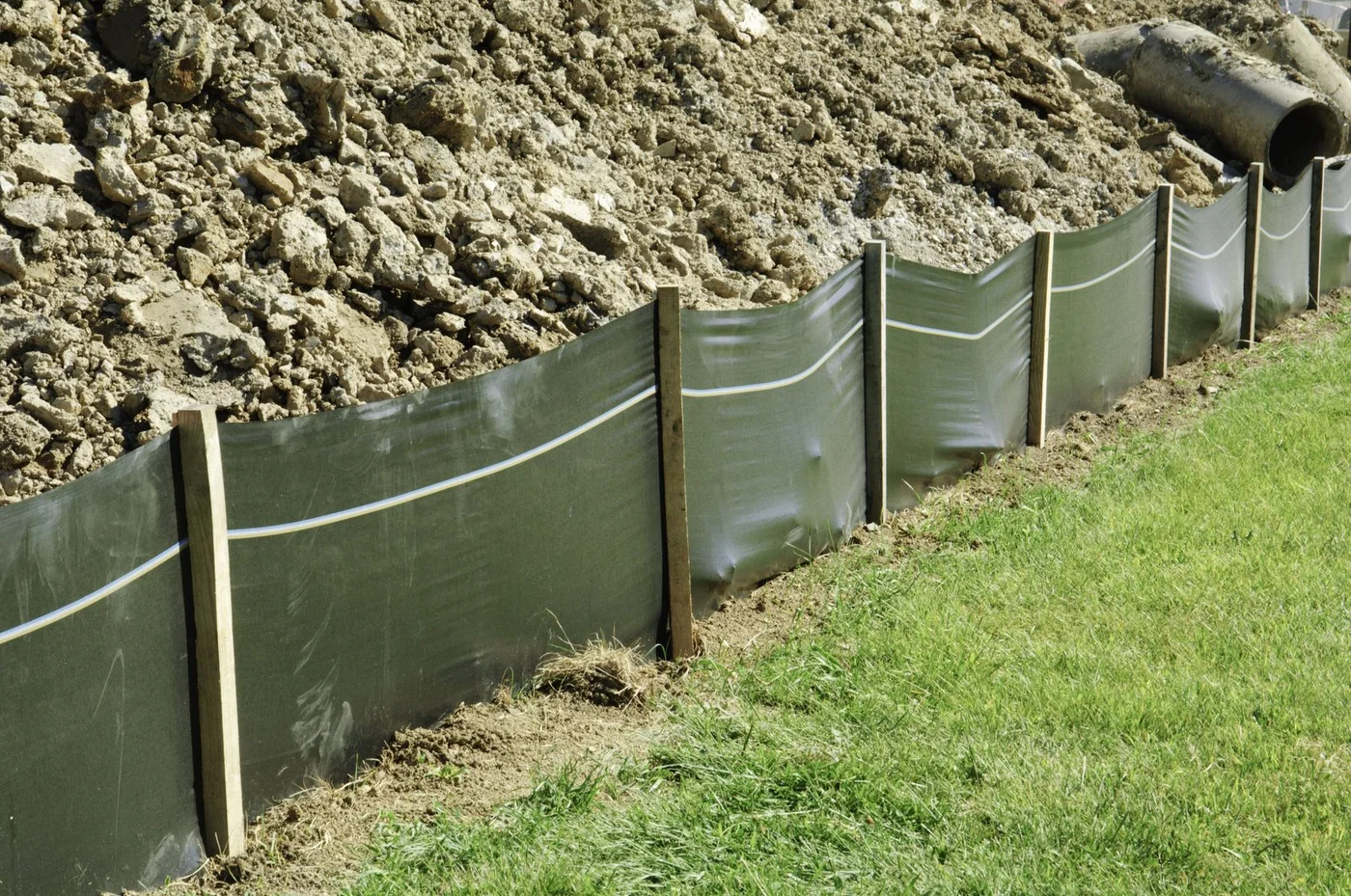
Silt fence catches sheet flow at the perimeter; it does nothing against concentrated flow and fails fast if water ponds behind it and finds the low post. Erosion blanket holds a seeded slope while grass establishes. Rip-rap armors a discharge point or a shoreline where water exits at speed. The right site usually uses more than one, placed where each does its job.
Install details decide whether it holds
Silt fence that's stapled to the posts and laid on top of the ground washes out in the first real rain. It has to be trenched in, the bottom edge buried so water can't run under it, with the posts set at proper spacing so it doesn't fold under load. Most failed silt fence we get called to replace failed at the trench, not the fabric.
Erosion blanket has to be pinned to the slope on the right spacing, not just rolled out, or it lifts and channels water underneath it. Rip-rap needs the right stone size and a filter layer under it or the soil pumps out through the gaps. The material is cheap; the install is where the money and the holding power are.
Get it down before the rain, and seed for the long term
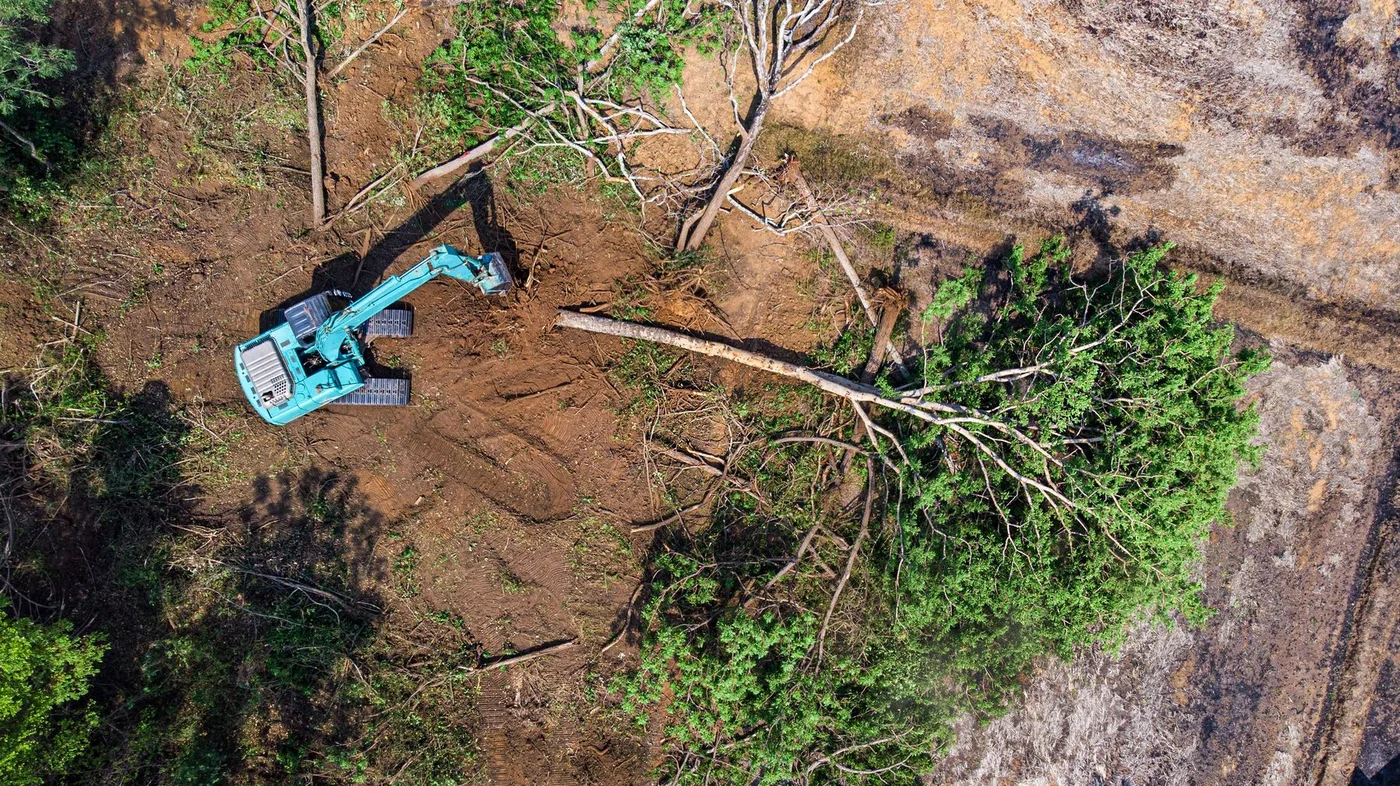
East Texas gets its heaviest rain in late winter and spring, and disturbed ground is most vulnerable right after it's cleared or graded, before anything is holding the topsoil. Controls go in as the work progresses, not after the first storm has already found the site. On a build or a cleared lot, that means silt fence and blanket at clear-time, not at the end.
Temporary controls buy time; permanent stabilization is grass. We seed bermuda or native grass matched to the site and the season, and on regulated sites, anything over an acre inside a city limit, that seeding and the silt fence are part of the SWPPP the inspector is checking. Done right, the ground holds itself once the grass is established and the temporary controls come out.
Bottom Line
Erosion control isn't a product you buy, it's an install matched to your soil, your slope, and the storm that's coming. We assess the risk before the ground is bare and put the right controls in the right places so the next rain doesn't undo the work.
Free On-Site Estimate
Disturbed ground before a storm?
Cleared lot, fresh grading, or a slope that's already cutting, we assess the soil and slope and install controls that hold, then seed for permanent cover. Free on-site estimate across East Texas.