What's in the structure
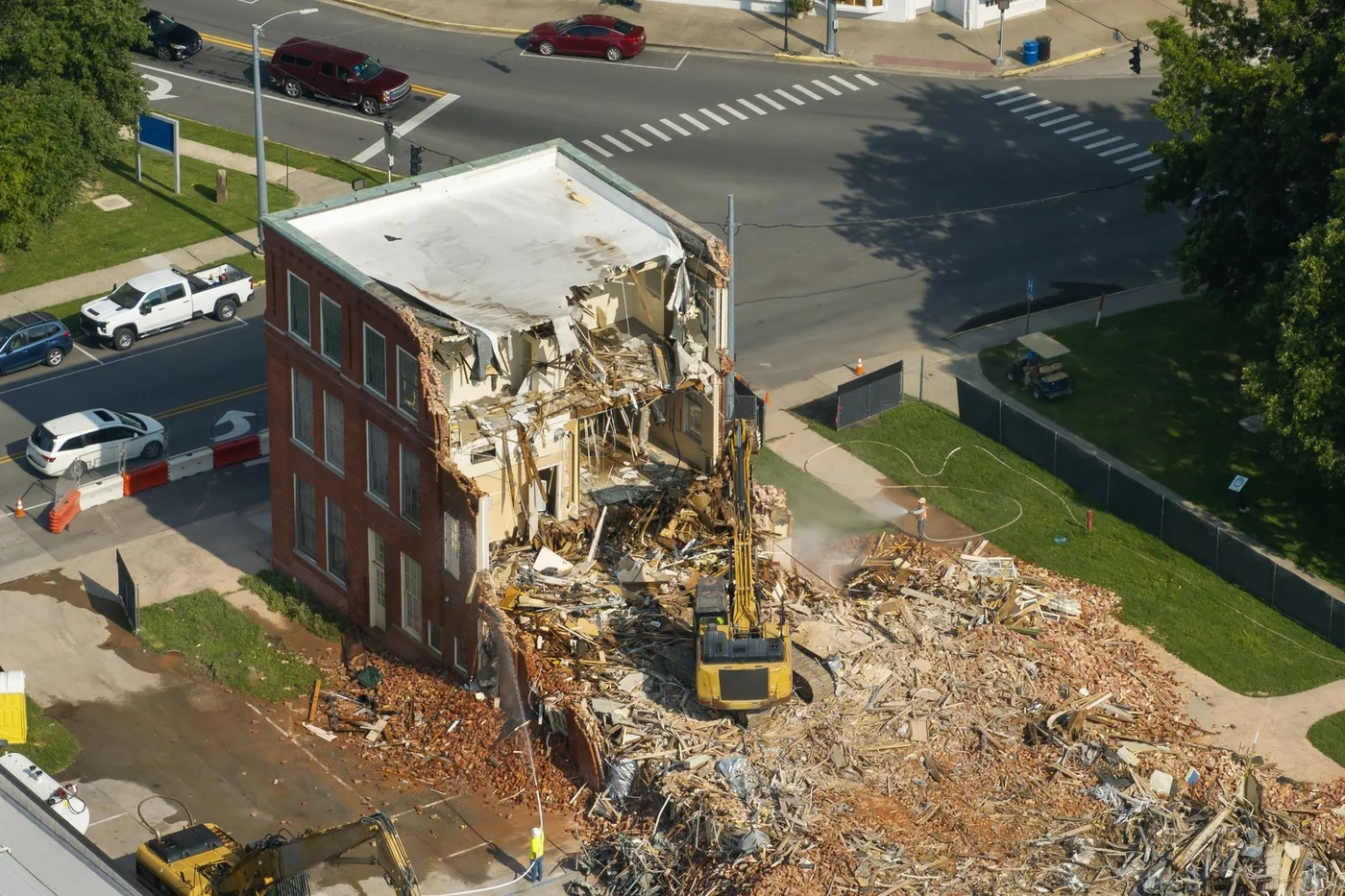
Before anything comes down we check for hazardous materials. Older East Texas farmhouses and commercial buildings can carry asbestos in flooring, siding, or pipe wrap, and that has to be handled and disposed of under TCEQ rules, not knocked into the general debris pile. On commercial demolition, Texas requires a TDLR notification and an asbestos survey before work starts, regardless of whether any is ultimately found.
Salvage cuts the other way. Heavy timber, brick, metal roofing, and architectural pieces can be pulled and recycled or resold, which lowers what goes to the landfill and sometimes offsets part of the cost. We flag both the hazards and the salvage at the walk-through, so the number reflects the real structure instead of a generic per-foot rate.
Access, the slab, and what's underground
A barn on open pasture in Van Zandt comes down and loads fast. A pier-and-beam house on a tight residential lot in Forney or Tyler, with a neighbor's fence on one side and a power drop on the other, takes protection, careful sequencing, and a smaller machine, all of which cost time. Utility disconnects, gas, electric, and water, have to be confirmed before demolition, and coordinating those can set the schedule more than the teardown itself.
What's under the structure matters as much as the structure. A slab that has to be broken out and hauled is a separate line from the building above it; a septic tank, an old fuel tank, or a pier foundation changes both the equipment and the disposal. We probe for these at the estimate so they don't surface as a change order mid-job.
Disposal and the haul
Most of a demolition bill is handling the debris, not knocking the structure down. Concrete and metal go to recyclers where it makes sense; the rest goes to a licensed landfill, and the tipping fees plus the haul distance from your site are a real part of the price. A rural teardown an hour from the nearest licensed facility carries more haul cost than the same building in town.
This is why we don't quote demolition over the phone. The drivers, hazmat, access, what's under the slab, and haul distance, aren't visible from a square-foot count, and guessing them either pads your price or sets up a change order. We walk it first and price what's actually there.
Bottom Line
A clean teardown leaves you a graded pad ready for what's next, not a pile and a surprise invoice. We check the structure, the access, and what's underground up front, then give you a firm number that holds unless the scope changes.
Free Demolition Quote
Have something that needs to come down?
Old barn, house, slab, or commercial structure, we check it for hazards and access, handle the disconnects and disposal, and leave you a clean graded pad. Free on-site estimate across East Texas.