
Forney, TX · Kaufman County
Drainage That Holds Through Clay-Soil Storms in Forney, TX
Houston Black clay doesn't drain. We trace where the water actually comes from, where it has to go, and build the system that gets it there, residential lots, commercial sites, and ranch pasture both.
What Forney Brings To The Job
Drainage That Holds Through Clay-Soil Storms, Forney, TX
Drainage that holds in Forney is mostly a new-build problem: lots that drained fine as open pasture flood once they're a graded slab with fences and neighbors on Houston Black clay. Builder grading often stops at the lot line, so the recurring fix is giving the water an actual path off the property.
We trace where the water collects, re-grade for positive fall away from the foundation, run French drains through the low spots, and carry everything to a real outlet, then stabilize so the fix survives the next storm.
Soil
Houston Black clay has zero infiltration, so water has to be physically carried off, the system is grade plus pipe, never a soakaway.
New construction
Builder grading commonly moves water to the lot line and stops; we come behind and route it to a code-acceptable discharge instead of the neighbor's yard.
Permits
City of Forney enforces stormwater and SWPPP above an acre; we handle what the scope triggers and protect the disturbed ground.
How We Deliver It
What “Drainage That Holds Through Clay-Soil Storms” Means In Forney
Site walk first, water flow traced from origin to exit before the bid
Regrading where the original slope is the actual problem, not just a trench bandaid
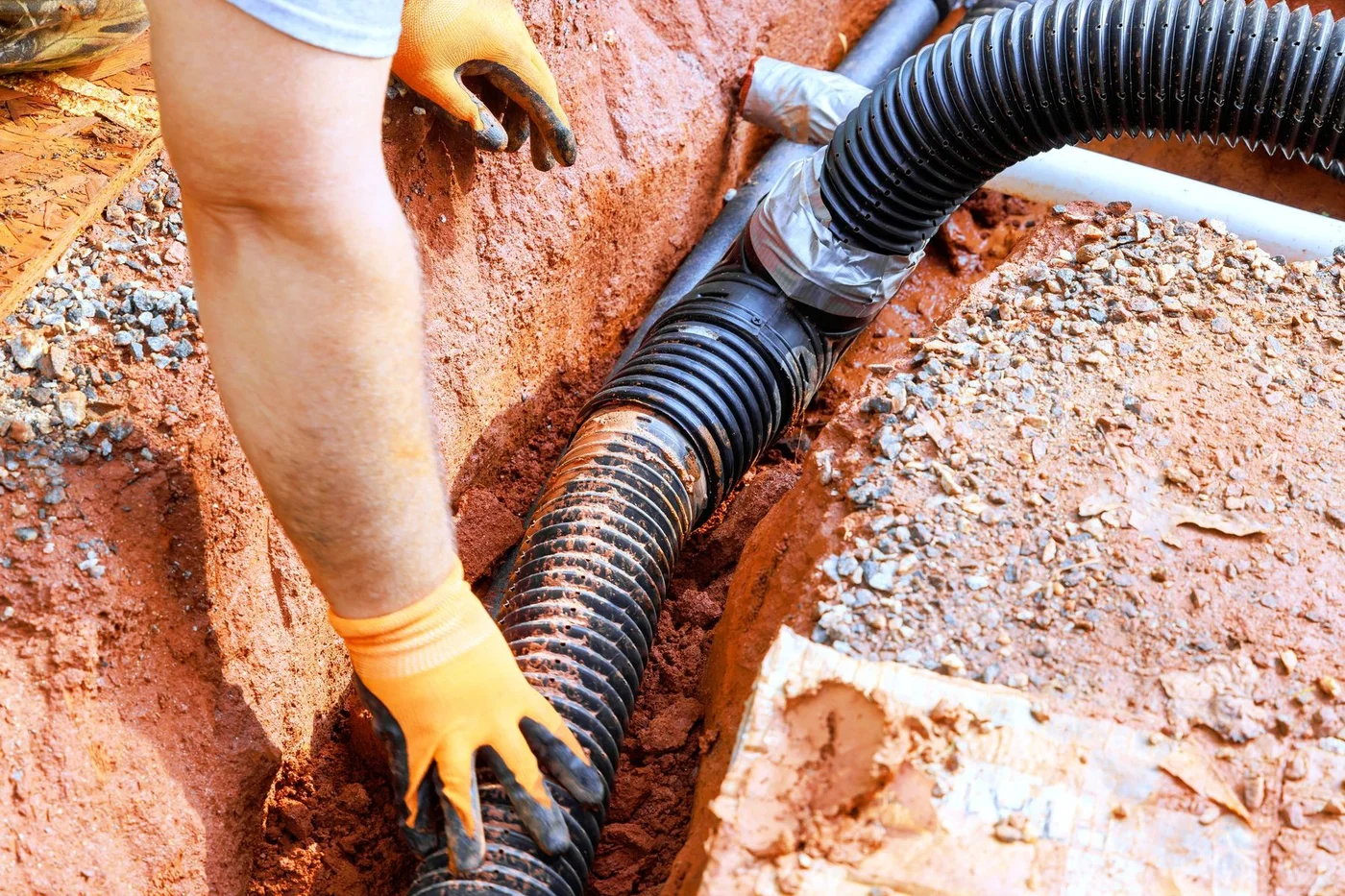
French drains trenched and stoned to depth for East Texas clay, not pipe-in-dirt
Culverts and inlets sized to real watershed acreage, not eyeballed
Outflow daylighted somewhere it actually leaves the property, not pooling in the neighbor's yard
Erosion control on disturbed slopes so the next storm doesn't undo the work
Services In Forney
The Work That Adds Up To This Outcome
Everything in Forney
More dirtwork we do in Forney, TX
Browse every published service, audience, and outcome we cover in Forney, or jump up to the Forney, TX overview.
Services in Forney
Results we deliver in Forney
Drainage That Holds Through Clay-Soil Storms FAQ
Questions about this outcome
- Q01What does "drainage that holds" actually mean?
- That the system was designed for where the water really comes from and where it can legally go, and built so a hard East Texas storm proves it rather than breaks it. Regrade, drains, culverts, and an outlet that leaves the property, working as one system, not a trench and a hope.
- Q02How do you find the real cause instead of the symptom?
- We trace the water: where it originates, how it crosses the property, where it stalls. On clay the answer is almost always surface-path, not soil absorption, so the fix follows the path, sometimes the problem is fifty feet uphill from the puddle.
- Q03Why do French drains fail on clay so often?
- Because pipe-in-dirt isn't a French drain. On Houston Black clay the trench needs real depth and stone, the run needs fall, and the pipe needs an outlet that daylights. Skip any of those and the clay wins, see drainage for how we build them.
- Q04How do you size culverts and inlets?
- To the watershed acreage actually draining through them, not to the pipe that was on the trailer. An undersized culvert backs water up in a storm and cuts its own washout; sizing it right once is what "holds" means.
- Q05Will the fix survive the next big storm?
- That's the design condition, the system is built for storm flow, with erosion protection on the disturbed ground so the first heavy rain seasons the work instead of undoing it. If the watershed above you changes later, new construction uphill, the system may need a revisit; we design with that headroom where we can.
- Q06What about my neighbor's runoff crossing my lot?
- Water follows grade, not property lines, and Texas drainage disputes are real. We design your fix to take the water that legitimately crosses you and discharge it legally, without weaponizing it against the lot next door.
- Q07What does drainage work cost?
- Scope sets it: a single regraded low spot with a short drain run is a light job, a full-lot system with culverts and long conveyance is a real one. Walk first, then a firm number, free, and we tell you which parts are urgent versus deferrable.
- Q08How long does the work take?
- Most residential systems go in over 1-3 days; commercial and multi-lot systems longer. Clay needs dry working windows, so the honest schedule bends with the forecast, and we tell you that up front rather than rut your yard proving it.
Get in Touch
Ready to Start
Your Project?
Call or send a message. We respond within one business day and come to you for the estimate, no charge, no obligation.
- Free on-site estimates
- Response within 1 business day
- Licensed & insured
Step 1 of 6
What's your first name?
So we know who we're talking to.