
Category · Gravel & Caliche Driveways
Gravel & Caliche Driveways Notes.
Field notes from an East Texas operator on gravel & caliche driveways, what the work involves, what to know before you call, and what we've learned doing this job hundreds of times.
See the Gravel & Caliche Driveways service pageMost of the driveway failures we get called out to across East Texas are not surface problems. The surface is only where the failure shows up. What actually went wrong is underneath it, in a base built too thin for the ground it sits on, or in a drive with no crown to push water off.
The base is the driveway
A load of rock dumped on bare ground is not a driveway. It is a load of rock that will be gone by the second wet season, pressed down into whatever was underneath it. What holds a drive up is a compacted base built to a depth that matches the soil below and the weight that runs over it.
That depth changes across our counties. Rockwall sits almost entirely on Houston Black clay, and western Kaufman sits on the same ground. That clay moves with moisture, swelling wet and shrinking dry, so a base built too thin cracks and pumps. Eastern Kaufman drifts to sandy clay and sandy loam, which holds shape better but needs proper compaction or it keeps settling. Same rock, same crew, different build, because the ground is different.
Crown and water are the other half
A driveway should shed water off both sides. Flat drives hold water in the wheel tracks, water softens the base, and traffic pumps the softened base up through the surface. That is the rut you are looking at. Crowning it is cheap when the drive is built and expensive to retrofit later.
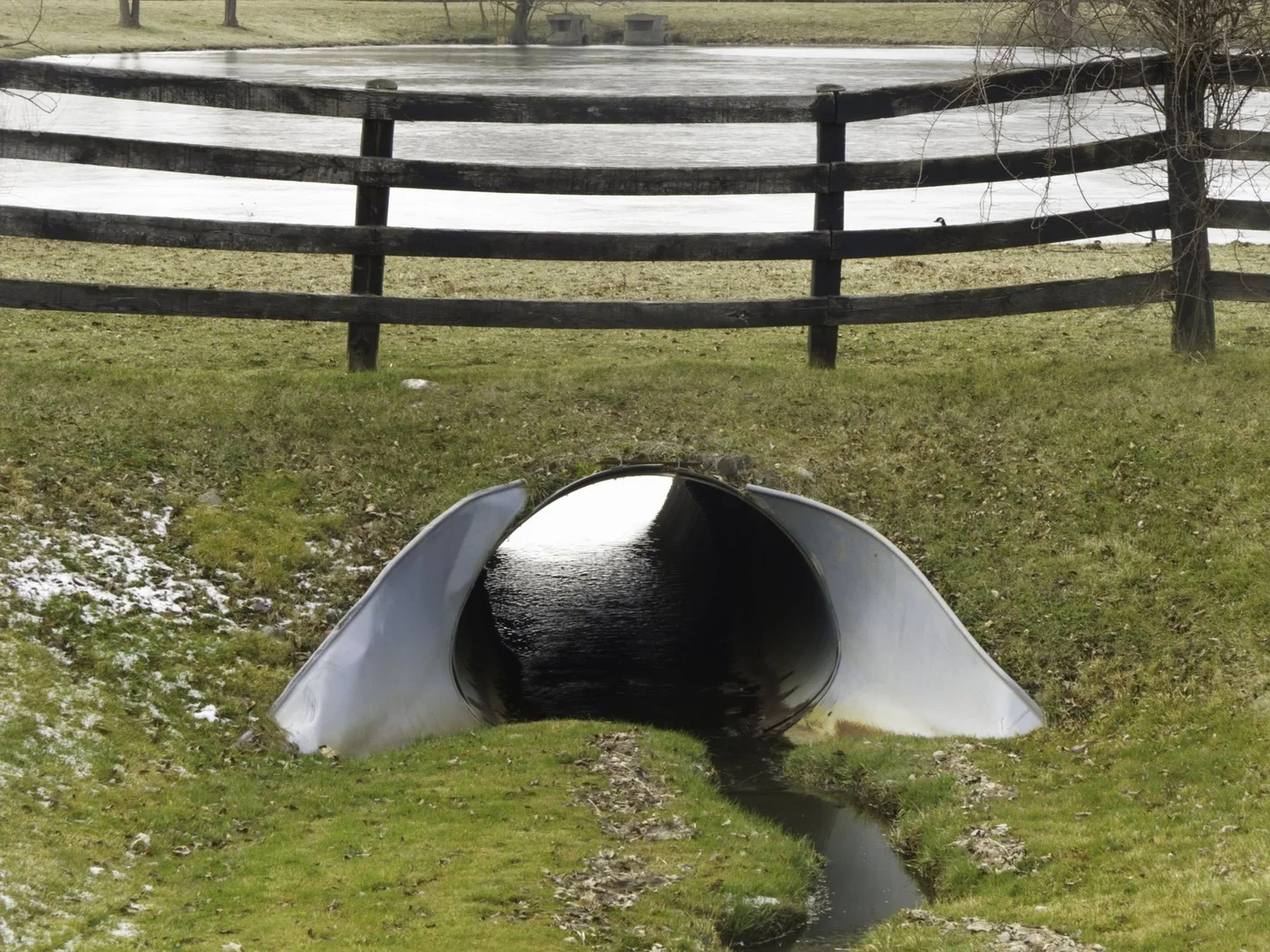
Where the drive crosses a ditch it needs a culvert sized for the water that ditch actually carries, not for what fits. Undersize it and the first real storm backs water over the drive and onto the road. In Kaufman County a culvert tying into the county right-of-way needs a permit, and the application goes through the precinct commissioner's office, which determines the proper size and contacts you with the culvert dimension and install date. Worth starting early rather than after the pad is graded.
What moves the price
Length and width set the tonnage, and tonnage is most of the bill. After that it is the surface material you pick, the base depth your soil demands, any culvert or drainage crossing the drive has to make, and how far the material has to be hauled to reach you. Access matters too. A drive that a belly dump can run straight down costs less to build than one where every load has to be moved twice.
We measure for exact tonnage rather than estimating by eye, because the two most common ways to overpay on a driveway are buying rock you do not need and buying the wrong rock twice.
Get in Touch
Ready to Start
Your Project?
Call or send a message. We respond within one business day and come to you for the estimate, no charge, no obligation.
- Free on-site estimates
- Response within 1 business day
- Licensed & insured
Step 1 of 6
What's your first name?
So we know who we're talking to.