Houston Black clay: Rockwall and western Kaufman
Houston Black is the famous Texas blackland clay. It's high-shrink-swell, holds water, and resists drainage. Properties in Rockwall, Heath, and western Kaufman sit on it almost universally. Drainage problems, foundation moisture problems, and pond-holding capacity all come back to this soil.
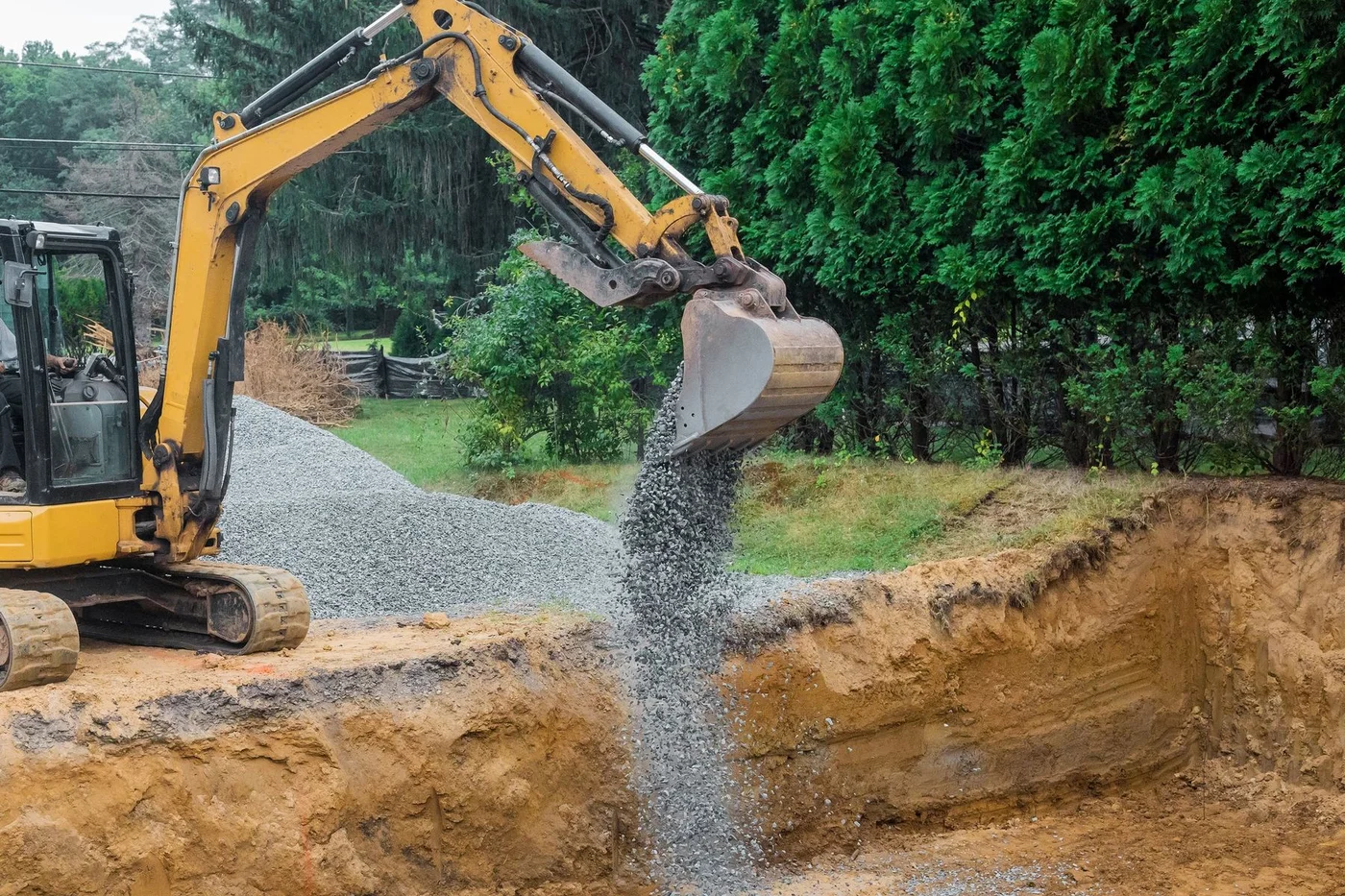
Pond bowls dug into Houston Black seal naturally with proper compaction. Foundations want piers, not slab-on-grade, because the shrink-swell will crack a slab.
Sandy loam: Henderson and Smith
Drive east from Kaufman and the soil shifts toward sandy loam. Henderson County, especially around Cedar Creek Lake, and most of Smith County including Tyler are sandy loam. Faster drainage, easier digging, but ponds in sand don't seal, they need clay liners.
Foundations in sandy loam are easier. The soil itself is more forgiving. But the trade-off is that erosion moves fast on disturbed sandy soil, so erosion control matters more here than on clay.
Bonham clay and caliche: Van Zandt
Van Zandt County is the transitional zone, Bonham clay, sandy loam, and caliche all show up across the county. Pasture clears in Canton can hit clay one morning and caliche the next. Equipment handling has to adapt.
Caliche specifically is the problem soil for pond work. It's hard, doesn't seal, and grinds equipment teeth fast. We charge differently on caliche-likely sites because the wear is real.
Why this matters at quote time
Every dirtwork bid we write factors soil. Excavation rates, pond-seal expectations, drainage strategy, equipment selection, even the order of operations on a multi-service job, all of it is downstream of soil. A bid that doesn't account for soil is a bid that's going to get amended in the field.
When we walk a property at estimate time, the first thing we read is the dirt.
Bottom Line
If you're planning dirtwork on East Texas property, the soil is the first variable. We read it before we quote, whether the job is drainage, site prep and grading, or a foundation dig. Tell us where the job is and we'll know what's under it before we get there.
Free On-Site Estimate
Not sure what's under your property?
We read the soil before we quote, then price the job for what your dirt actually does. Free on-site estimate across East Texas, no ballparks over the phone.